Once again it is time for the Hymers Fall Fair. I think it is the 106th year of the event in the Whitefish River area of Northwest Ontario. It's just outside the Municipality of Neebing and not far from South Gillies and Nolalu, nestled back in the woods where you have to be looking for it on purpose. Otherwise you wouldn't know it was there. I only "discovered" it about twenty years ago and have attended on an irregular basis as Labour Day weekend can throw unexpected things at a person. For example, my brother came to visit and brought his two friends Mohammad and Mohammad who helped fill in the evenings with their company. (I want them to go on the road with their musical group, Mickey and the Mohammads and I could be the opening act.) Professor Batty is in town, but I can't seem to get away to hunt him down. On top of everything I have tweaked my back and am having trouble moving. If not for pharmaceuticals I don't know if I could move at all.
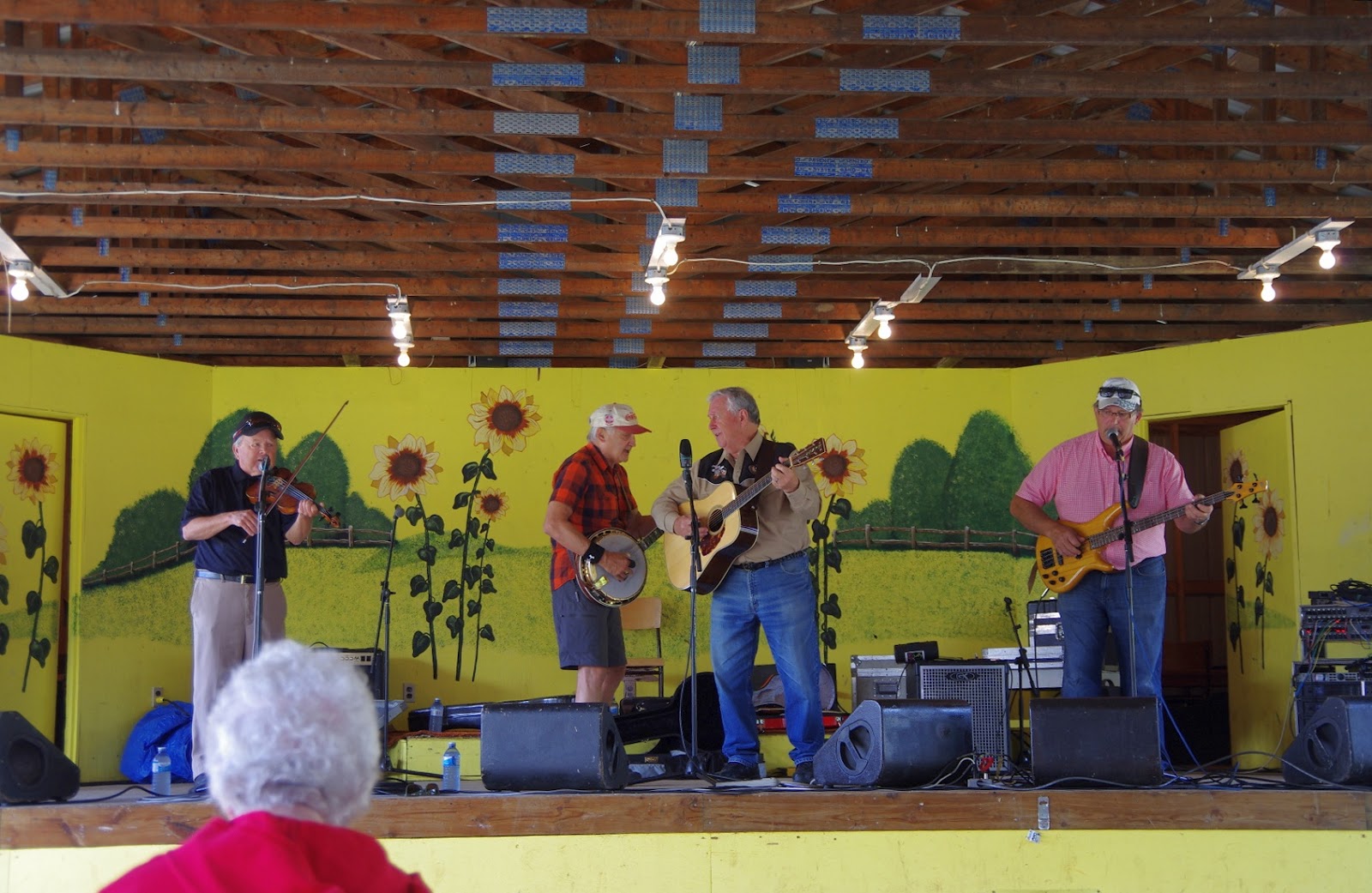
So I went to Hymers anyway. I caught a bluegrass band, Gibson, Martin, and I, that I have followed for about 25 years. It's good to see that they are still upright, but they have turned a bit gray (just like me!) and can still play the notes and be entertaining. We're not dead yet!
There were a couple of inspired dancers, too.
There were lots of dogs there this year which added to the people watching experience.
Dogs:
People:
There were farm animals and equestrian events.
There were exhibits of many types:
Being in Canada there were all sorts of things maple which I had to taste and then acquire for myself. Nobody better touch my maple butter!
Then it was time to return to the United States.
It was a fun, but somewhat tiring day and the trip home was fairly quiet, although the corn dog and onion rings kept reminding me that I had eaten them earlier. I looked carefully to see if there was a wall being built to keep us southern riffraff out of Canada. There wasn't. The Border Patrol did want to inspect our bags of goodies that we were bringing home and fortunately for them they didn't try to abscond with my maple butter. We got to bring our corn and fudge back, too. I hate to think what an ugly scene it could have been.
Happy Labour Day to all who celebrate it! Thank you labor unions!
StatCounter
Monday, September 4, 2017
Sunday, August 20, 2017
Things I forgot to tell you and New Stuff
When I was down in Minneapolis for the wedding I saw my first Tesla! It was pretty. I don't see them up here because of their limited range, but I think one of the big West End (of the county) resorts has some plug in stations for electric cars.
When I went out to look at the stars I was greeted by a howling wolf pack less than a half mile away. When I went around back of the house I scared a deer away. Maybe it thought I was one of the wolves.
Tomorrow is an eclipse of the sun. These happen regularly on the planet (averaging less than one total eclipse per year), but I haven't seen one since the 70s. There were a couple I saw during that decade so I guess this one is only a big deal since it crosses the U.S. diagonally from coast to coast. I will only see about 80% here, but it will be cloudy so I won't likely see it at all.
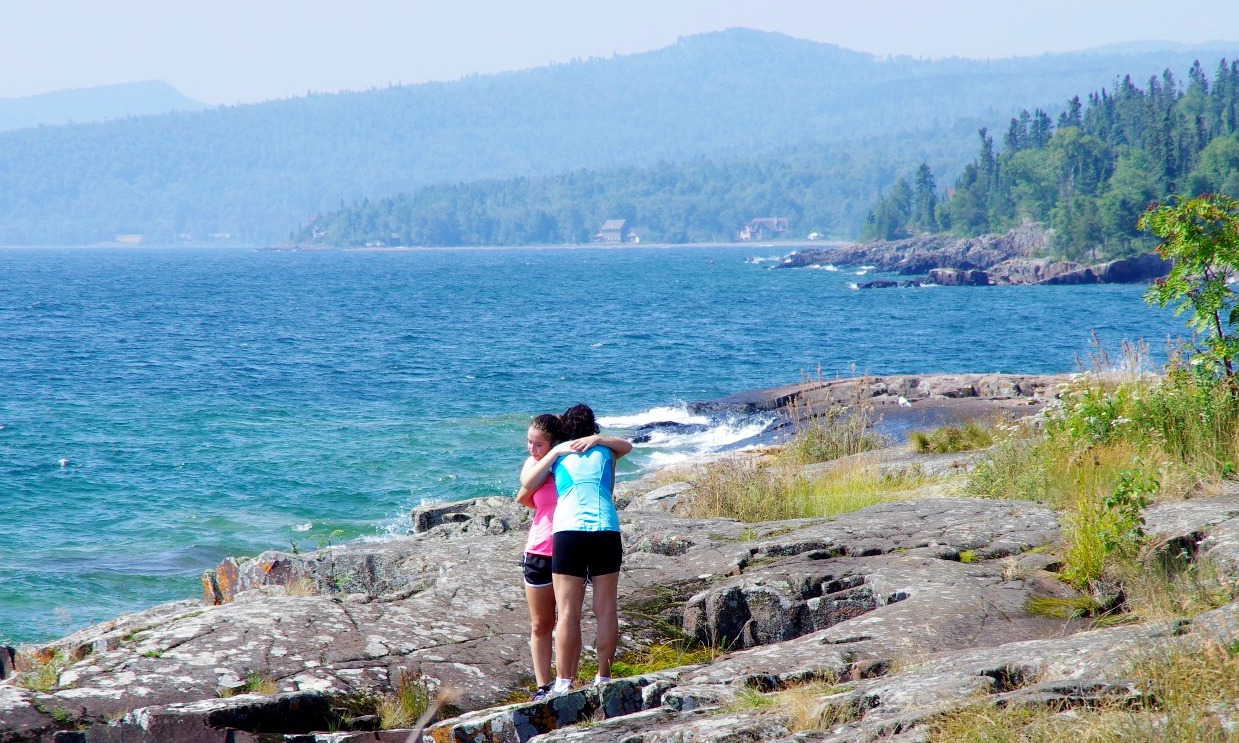
Meanwhile, I like sunny days better. Summer is starting to wane and there are some leaves jumping the gun of autumn. I had to work a half day on Saturday and decided that since it was a nice day I would stop by the harbor and take my camera for a short walk. And this is what I saw:
Families and friends enjoying each other's company.
And then I just sat on the rocks for a bit and took some deep breaths to relax. Work has been grueling and I was tired so it felt good to just stop everything for a few long moments. I watched the waves roll in as they have done for millennia and just sat there. It was lovely.
Click to embiggen.
Sunday, August 13, 2017
Summer Activities
While I was lacking inspiration to write anything I published a bit of my father's life as it seemed more interesting. Then I made a quick trip out of town last weekend, but in looking through the stuff I had actually been doing the last few weeks I decided it wasn't so bad. Even if the only time I seem to have is on the weekends it has been a fun month. I'll mostly show it in pictures.
Earlier in July we had the local Art Festival. Over 70 local and regional artists were exhibiting their wares and there was a pretty steady crowd milling around for a couple of days. The weather was reasonably cooperative, the lake was a wonderful companion and the entertainment was first rate.
At the end of July, a couple of days after my birthday, A couple of friends invited me to go along to
People watching at these things is always fun, isn't it?
Here are a couple of buskers entertaining Dan (who is remaining anonymous) and Ann, who is obviously happy, and Ayla (who stopped by the farm last year to visit our horses)is tending to her dogs.
Last weekend I went to a friend's daughter's wedding in Minneapolis. It was a combination of the young friends of the bride and groom and those of my vintage all enjoying themselves on Nicollet Island which is in the Mississippi River. I got to see a lot of old friends and roommates from years ago. Here is the bride and the parents and brother of the bride.
The last shot is Maggie, the bride, and her father Jim who is one of my best friends for the last 48 years or so.
This weekend is the Perseid meteor shower. I went out behind the house Friday night to see what I could see. I saw a hundred satellites and several meteors and attempted to take photos of the event to see if I could capture any. I have tried this before without much success. I only had until about 11:30 when the moon would be above the trees and too bright. This time I got one! Click on it for a better visual experience.
Earlier in July we had the local Art Festival. Over 70 local and regional artists were exhibiting their wares and there was a pretty steady crowd milling around for a couple of days. The weather was reasonably cooperative, the lake was a wonderful companion and the entertainment was first rate.
At the end of July, a couple of days after my birthday, A couple of friends invited me to go along to
5th annual Bay & Algoma Busker's Festival in Thunder Bay, Ontario which is just across the border. Thank goodness the Canadians haven't built a wall yet to keep out us undesirables from the South so all we needed was our passports. There were at least 27 acts signed up for the two day festival along with food vendors and the local businesses in this Finnish community. Most of the performers were quite good and the local food was also tasty. It was a hot day by our standards and might have gotten into the low 80s Fahrenheit for us and about 27 or 28 C for them. Some people dress for the heat and the nearby harbour has a wading pool for everyone to cool off. Here are Ann and Dan deciding if the want to wet their toes.
People watching at these things is always fun, isn't it?
Here are a couple of buskers entertaining Dan (who is remaining anonymous) and Ann, who is obviously happy, and Ayla (who stopped by the farm last year to visit our horses)is tending to her dogs.
Last weekend I went to a friend's daughter's wedding in Minneapolis. It was a combination of the young friends of the bride and groom and those of my vintage all enjoying themselves on Nicollet Island which is in the Mississippi River. I got to see a lot of old friends and roommates from years ago. Here is the bride and the parents and brother of the bride.
The last shot is Maggie, the bride, and her father Jim who is one of my best friends for the last 48 years or so.
This weekend is the Perseid meteor shower. I went out behind the house Friday night to see what I could see. I saw a hundred satellites and several meteors and attempted to take photos of the event to see if I could capture any. I have tried this before without much success. I only had until about 11:30 when the moon would be above the trees and too bright. This time I got one! Click on it for a better visual experience.
Saturday, July 29, 2017
Coming to America (continued)
"In the early spring we would drive down to the beach for the day. Got pretty sunburned, since we weren't used to that hot sun. Both Olaf and Erik Lorentzen had cars, as well as Tore Runhovde who had a big Buick convertible.
Since I was interested in song and music, I joined the Glee Club and received a key on "Honors Day". Mr Kuszinski wanted me to join the band the next year, but now I was in graduate school and too busy studying.
My roommate Chuck talked me into going with him to the Congregational Church. Made some very good friends there and we had a very nice fellowship supper there every Sunday evening. The Lutheran minister couldn't quite figure those Norwegians who never came to church.
Since we had tickets to all the ball games, we attended those. Suppose I was quite interested in the teams. Basketball was good, football mediocre.
We had almost all of our meals in the cafeteria. You could have three meals a day for $1.50, and you wanted to be extra extravagant, you could have a "cow college" t-bone steak for $1.45. Sometimes we would have breakfast across the road (Hillsboro Street) and dinner with Steve Yang at the Chinese restaurant down on Hillsboro, eating with chopsticks, or we could go to the S&W cafeteria downtown, where black waiters would carry your tray for a dime.
The college had about 5000 students at the time, approximately 4900 men and 100 women, all white. All the janitors were black. They made about $25.00 a week.
The school year was divided into three semesters, fall, winter, and spring. Tuition for an out of state student was $100.00 per semester. Lodging in the Gold dorm where I lived was $28 per semester. Not a bad price for a college education.
Infrequently, when studying at night you would hear a trumpet blaring, and looking out the window a cross would be burning out on the lawn. It meant nothing to me at the time, but thinking about it later, there were many "foreigners" living in those dorms.
The Andersons would take me along or give me tickets to the Community Concerts. I was very fortunate to see and hear in person, Marian Anderson, Arthur Rubinstein, and Leonard Bernstein. He was at that time conducting the Pittsburgh Symphony and was soloist in Gershwins "Rhapsody in Blue".
Travels When in College
My first outing when at State was to attend a meeting of the AATCC (the American Association of Textile Chemists and Colorists). I had been in school for a few weeks and Hank (Professor Rutherford) asked if anybody wanted to go (he had the use of the Dean's car). I raised my hand, the only one.
Hank Rutherford 1947
We left early on Saturday morning for Greenville, South Carolina. Arrived at the Poinsett Hotel about noon. Got one room with one double bed! I don't mind Hank told the desk attendant. I didn't mind either, being accustomed to lean sleeping quarters in Norway during the war years.

Had a good time. The DuPont group invited us for lunch. It was the first time I had shrimp cocktail. Left about noon time Sunday. On Monday morning Dean Campbell asked Hank, "How did Otto enjoy the meeting?" and Hank answered, "He thought it was a great success." It was just great how I was accepted after just a few weeks at school.
Audun, my brother, was in Cleveland, Ohio, and asked me to come and spend Christmas there and then we would go up to Canada for some skiing. My friend at college, Pete Bachinger who was Swiss, was going to Wisconsin, so he gave me a ride to Cleveland. Dropped me off at Andy's (Audun's) house. We had a nice Christmas spending Christmas Eve with the Furseth family from Bergen. We left for Canada Christmas day evening. Stopped in Montreal, very cold. After a spaghetti lunch, we stopped at the Canadian Broadcasting System where Andy had made some broadcastsabout the life of a Norwegian student in the U.S.A. The announcer was Krabbe Smith, a real neat guy. Tante (aunt) Ovidia had heard Andy's broadcasts and written to Krabbe Smith and got some very nice replies. In the afternoon we left for Ste. Agathe Des Monts where we stayed the next week. Had a nice room in a boarding house, paid $2.00 per day. Good skiing, cold, and not many people around."
To be continued soon.
Things were different 70 years ago, weren't they?
Since I was interested in song and music, I joined the Glee Club and received a key on "Honors Day". Mr Kuszinski wanted me to join the band the next year, but now I was in graduate school and too busy studying.
My roommate Chuck talked me into going with him to the Congregational Church. Made some very good friends there and we had a very nice fellowship supper there every Sunday evening. The Lutheran minister couldn't quite figure those Norwegians who never came to church.
Since we had tickets to all the ball games, we attended those. Suppose I was quite interested in the teams. Basketball was good, football mediocre.
We had almost all of our meals in the cafeteria. You could have three meals a day for $1.50, and you wanted to be extra extravagant, you could have a "cow college" t-bone steak for $1.45. Sometimes we would have breakfast across the road (Hillsboro Street) and dinner with Steve Yang at the Chinese restaurant down on Hillsboro, eating with chopsticks, or we could go to the S&W cafeteria downtown, where black waiters would carry your tray for a dime.
The college had about 5000 students at the time, approximately 4900 men and 100 women, all white. All the janitors were black. They made about $25.00 a week.
The school year was divided into three semesters, fall, winter, and spring. Tuition for an out of state student was $100.00 per semester. Lodging in the Gold dorm where I lived was $28 per semester. Not a bad price for a college education.
Infrequently, when studying at night you would hear a trumpet blaring, and looking out the window a cross would be burning out on the lawn. It meant nothing to me at the time, but thinking about it later, there were many "foreigners" living in those dorms.
The Andersons would take me along or give me tickets to the Community Concerts. I was very fortunate to see and hear in person, Marian Anderson, Arthur Rubinstein, and Leonard Bernstein. He was at that time conducting the Pittsburgh Symphony and was soloist in Gershwins "Rhapsody in Blue".
Travels When in College
My first outing when at State was to attend a meeting of the AATCC (the American Association of Textile Chemists and Colorists). I had been in school for a few weeks and Hank (Professor Rutherford) asked if anybody wanted to go (he had the use of the Dean's car). I raised my hand, the only one.
Hank Rutherford 1947We left early on Saturday morning for Greenville, South Carolina. Arrived at the Poinsett Hotel about noon. Got one room with one double bed! I don't mind Hank told the desk attendant. I didn't mind either, being accustomed to lean sleeping quarters in Norway during the war years.
Had a good time. The DuPont group invited us for lunch. It was the first time I had shrimp cocktail. Left about noon time Sunday. On Monday morning Dean Campbell asked Hank, "How did Otto enjoy the meeting?" and Hank answered, "He thought it was a great success." It was just great how I was accepted after just a few weeks at school.
Audun, my brother, was in Cleveland, Ohio, and asked me to come and spend Christmas there and then we would go up to Canada for some skiing. My friend at college, Pete Bachinger who was Swiss, was going to Wisconsin, so he gave me a ride to Cleveland. Dropped me off at Andy's (Audun's) house. We had a nice Christmas spending Christmas Eve with the Furseth family from Bergen. We left for Canada Christmas day evening. Stopped in Montreal, very cold. After a spaghetti lunch, we stopped at the Canadian Broadcasting System where Andy had made some broadcastsabout the life of a Norwegian student in the U.S.A. The announcer was Krabbe Smith, a real neat guy. Tante (aunt) Ovidia had heard Andy's broadcasts and written to Krabbe Smith and got some very nice replies. In the afternoon we left for Ste. Agathe Des Monts where we stayed the next week. Had a nice room in a boarding house, paid $2.00 per day. Good skiing, cold, and not many people around."
To be continued soon.
Things were different 70 years ago, weren't they?
Sunday, July 23, 2017
Coming to America
No, not the Eddie Murphy movie, but another excerpt from the autobiography of my father, Otto, after whom this blog is named.
The war was over and in 1946 Otto's younger brother, Audun, had gotten a scholarship to attend Case School of Applied Science (later Case Western Reserve University) and had to leave that same day for the U.S.A.
Otto spent that summer of 1946 in Iceland with his Uncle Balduin and Aunt Gunnhildur and cousins. This is where we pick up the story. The rest is directly from his autobiography.
"I did a lot of sightseeing and joined the local band in Akureyri and the folk dancers. Spent a few days in Stefän Jönsson's home in Saudarkrökur and a couple of weeks in Reykjavik. I was thinking of staying but wanted to get back to Norway to start preparations for my study in the USA. I caught a small cargo ship going to Sweden where Herulf met me in Gothenborg. From there, the train to Oslo and then to Bergen.
Getting ready for America
Back in Bergen I started working at Fleischer's again In the Fall we moved back to Laksevaag (note: Laksevaag is part of the Bergen "metro area". In 1944 their home had been destroyed during the allied bombing and they each had to find other places to live). My Father and a Mr. Johannesen had started and electrical contracting and appliance business there. On New Year's Eve he and Margith (Larsen) got married. Next spring I went to the hospital to have an operation for varicocele which had bothered me especially participating in sports. Spent a week in the hospital around Easter 1947.
To get my visa (student), I needed a lot of papers, not too difficult to get. It was a lot harder three years later when applying for immigration visa.
Money was another problem. My Father helped a lot. God bless him.
Going to America
Left Bergen on the night train for Oslo. My friend Ole Hilstad at the railroad office had gotten me a room at a small hotel. I stayed there a few days and then my cousin Margith asked me to stay with them until I left. Had gotten passage on a troop transport the "Marine Jumper", Moore and McCormack Line. Left Oslo early September. First stop was Havre, then Southampton and then to New York where we arrived 13 days after leaving Oslo. Got off the ship early Monday morning. I had met Olav Torgersen on the ship. He was also a student at N.C. State and had been home for the summer. We took a taxi to Penn Station, where we checked most of the luggage for Raliegh. Olav flew down and I was on my own. Got on the right train, changed trains in Washington D.C. where I met a guy who was also going to State, and I travelled with him to Raliegh. We got there early th next morning. Rode the bus to school.
North Carolina State University
Got myself a room, and after trials and tribulations got situated. Lived in Gold Dormitory. My roommate was Chuck (Charles) Swerdlove from the Bronx, New York. He was, and still is, a great guy and good friend.
I started as a special student, taking courses that would be good for me when later I returned to Norway. Most of the courses were in the School of Textiles. The head of the Textile and Dyeing Department was Henry (Hank) A Rutherford. He had just come to N.C. State. The Dean was Malcolm E. Campbell. They both became very good friends of mine.
I did well in school getting mostly A' and B's. After a while I thought perhaps I would like to stay in the U.S.. I did part time work in school. So during the next summer, 1948, with the help of Hank and Dean Campbell, and some others I was accepted in the Graduate School and got my M.S. degree the next June, 1949. I was accepted on trial and had to get at least B in the courses I took."
College Life
When starting college, we were seven Norwegians at N.C. State, all enrolled in the School of Textiles. We had a number of other "foreigners", Chinese, South Americans, Middle and Far Easterners, and a few Europeans.
I struggled through the first few month, especially because of the language problem. That Southern drawl was not the King's English that we had learned in school. Few social activities the first year. At night before going to bed, Chuck and I would go to Grimes cafe, just off campus, and have a bottle of Seven Up, 5 cents in those days.
Olaf Torgersen whom I had met on the ship coming over lived a few blocks from the campus in the home of Dr. Nels Anderson who was a dean at the college. Olaf was a good friend and we had many meals down there in the cellar where he had a room. I was also invited to have Thanksgiving Dinner with them at their home in 1947. Their maid Ruby was a skinny black girl. During my first summer 1948 I lived in the Anderson house, since my dorm was closed and being painted, etc.
I made friends with several American students, visiting with Dick Davis at his home in Lexington. We rode the bus in those days.
On the 17th of May (our Norwegian Constitution Day) we would have a party. 1048 was nice and quiet, 1949 somewhat more tumultuous. That's when we had to carry Steve Yang, our Chinese friend, out. He was a character living across the hall from me. As of this writing, I just had a letter from Hank where he says, "He is still the same old Steve".
To be continued...
The war was over and in 1946 Otto's younger brother, Audun, had gotten a scholarship to attend Case School of Applied Science (later Case Western Reserve University) and had to leave that same day for the U.S.A.
Otto spent that summer of 1946 in Iceland with his Uncle Balduin and Aunt Gunnhildur and cousins. This is where we pick up the story. The rest is directly from his autobiography.
"I did a lot of sightseeing and joined the local band in Akureyri and the folk dancers. Spent a few days in Stefän Jönsson's home in Saudarkrökur and a couple of weeks in Reykjavik. I was thinking of staying but wanted to get back to Norway to start preparations for my study in the USA. I caught a small cargo ship going to Sweden where Herulf met me in Gothenborg. From there, the train to Oslo and then to Bergen.
Getting ready for America
Back in Bergen I started working at Fleischer's again In the Fall we moved back to Laksevaag (note: Laksevaag is part of the Bergen "metro area". In 1944 their home had been destroyed during the allied bombing and they each had to find other places to live). My Father and a Mr. Johannesen had started and electrical contracting and appliance business there. On New Year's Eve he and Margith (Larsen) got married. Next spring I went to the hospital to have an operation for varicocele which had bothered me especially participating in sports. Spent a week in the hospital around Easter 1947.
To get my visa (student), I needed a lot of papers, not too difficult to get. It was a lot harder three years later when applying for immigration visa.
Money was another problem. My Father helped a lot. God bless him.
Going to America
Left Bergen on the night train for Oslo. My friend Ole Hilstad at the railroad office had gotten me a room at a small hotel. I stayed there a few days and then my cousin Margith asked me to stay with them until I left. Had gotten passage on a troop transport the "Marine Jumper", Moore and McCormack Line. Left Oslo early September. First stop was Havre, then Southampton and then to New York where we arrived 13 days after leaving Oslo. Got off the ship early Monday morning. I had met Olav Torgersen on the ship. He was also a student at N.C. State and had been home for the summer. We took a taxi to Penn Station, where we checked most of the luggage for Raliegh. Olav flew down and I was on my own. Got on the right train, changed trains in Washington D.C. where I met a guy who was also going to State, and I travelled with him to Raliegh. We got there early th next morning. Rode the bus to school.
North Carolina State University
Got myself a room, and after trials and tribulations got situated. Lived in Gold Dormitory. My roommate was Chuck (Charles) Swerdlove from the Bronx, New York. He was, and still is, a great guy and good friend.
I started as a special student, taking courses that would be good for me when later I returned to Norway. Most of the courses were in the School of Textiles. The head of the Textile and Dyeing Department was Henry (Hank) A Rutherford. He had just come to N.C. State. The Dean was Malcolm E. Campbell. They both became very good friends of mine.
I did well in school getting mostly A' and B's. After a while I thought perhaps I would like to stay in the U.S.. I did part time work in school. So during the next summer, 1948, with the help of Hank and Dean Campbell, and some others I was accepted in the Graduate School and got my M.S. degree the next June, 1949. I was accepted on trial and had to get at least B in the courses I took."
College Life
When starting college, we were seven Norwegians at N.C. State, all enrolled in the School of Textiles. We had a number of other "foreigners", Chinese, South Americans, Middle and Far Easterners, and a few Europeans.
I struggled through the first few month, especially because of the language problem. That Southern drawl was not the King's English that we had learned in school. Few social activities the first year. At night before going to bed, Chuck and I would go to Grimes cafe, just off campus, and have a bottle of Seven Up, 5 cents in those days.
Olaf Torgersen whom I had met on the ship coming over lived a few blocks from the campus in the home of Dr. Nels Anderson who was a dean at the college. Olaf was a good friend and we had many meals down there in the cellar where he had a room. I was also invited to have Thanksgiving Dinner with them at their home in 1947. Their maid Ruby was a skinny black girl. During my first summer 1948 I lived in the Anderson house, since my dorm was closed and being painted, etc.
I made friends with several American students, visiting with Dick Davis at his home in Lexington. We rode the bus in those days.
On the 17th of May (our Norwegian Constitution Day) we would have a party. 1048 was nice and quiet, 1949 somewhat more tumultuous. That's when we had to carry Steve Yang, our Chinese friend, out. He was a character living across the hall from me. As of this writing, I just had a letter from Hank where he says, "He is still the same old Steve".
To be continued...
Saturday, July 8, 2017
There was this guy...
Long ago and far away I was a college student working at a camp in the Adirondack Mountains of New York. I worked there for three summers 1970, 1971, and 1972 for for the McKennas, William Brewster (W.B.) McKenna (cousin of Murr Brewster) and his wife, Patricia Alden McKenna. They were well educated and you may see in their names that they descendants of early European settlers in North America. They had many friends and relatives that would come to visit them during their summer stays in the Adirondacks, but they wintered in Tucson, Arizona.
My job was to be their "Boy" for lack of a better title. I took care of the driving, the cleaning, firewood, dishes, a little light cooking, and chauffeuring, including transporting the McKennas and their guests by boat from the parking lot and landing across the lake. My uncles Audun and Kaare had also had this same position back in the 1940s and 1950s when the McKennas spent most of their time in Cleveland, Ohio. My uncles were continuing their engineering studies at Case Western Reserve University at the time before they went on to their PhDs at MIT, but I digress.
Mr. McKenna had a cousin who came to visit us either the first or second summer I was at their camp. His name was Dr. Donald (Redfield) Griffin, a professor at Rockefeller Institute (now University) who seemed to know a bit about animal behavior. His wife, Jocelyn Crane Griffin was also a well known (in those circles) animal behavior scientist. She was primarily known for her fiddler crab research, mostly done in Venezuela and Trinidad. I was a college freshman/sophomore majoring in biology. I was somewhat in awe of these two very interesting and very nice people.
Dr. Griffin had been banding bats since he was in high school (early 1930s) and continued doing it throughout the years. He banded many thousands and some of this was based out of Woods Hole Oceanographic Institution in Massachusetts where his uncle, Alfred C. Redfield, was affiliated (later Associate Director). Redfield was also chairman of Harvard's Biology Department.
What Dr. Griffin was most noted for was that bats navigate by radar. He was working for the U.S. government during the Second World War on a project using bats to guide bombs. Early editions of smart bombs, I suppose. He termed the word echolocation. He also became Chairman of the Biology Department at Harvard University in the mid 1960s for a few years. His pioneering work in bird and bat migration led to many new discoveries.
One day during his stay with his cousin he wanted to go for a walk in the woods and this 19 year old college student said, "Sure!" We went a couple of miles back to a large, but abandoned beaver pond back in the forest. He explained to me how they had made trails to skid logs and branches from places farther away from the pond as they ate themselves out of house and home. You could see the remnants of the trails and signs of the forest growing back in. The pond had been abandoned for some time, so I essentially got a lesson in beaver archeology. I had never had personal tutoring of this caliber, nor would I ever again, but I never forgot it.
Dr. Griffin was at this time beginning his more formal studies on animal communication and interaction with their environment that showed reasoning ability and real thinking in a way that no one had dared study before. It was said that had it not been him who was doing these studies that anyone else would have been scoffed at in the scientific community.
We now understand animal echolocation in whales and dolphins as well as tool use by birds and mammals. Basically, he was studying the thought processes in critters. While we all know some "smart" animals and have stories about things we have seen them do, Dr. Griffin was one of, if not the first scientist to document and publish scientific papers on these things. Many others have carried on this type of work. Dr. Jane Goodall comes to mind.
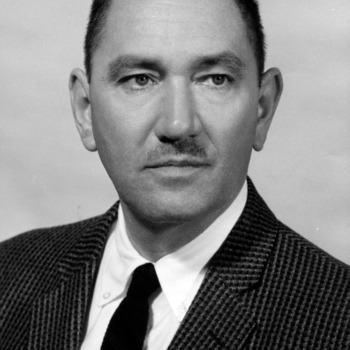
Here he was later in his life still doing the things he loved.
(picture lifted from the internet)
My own interest in birds and animals took some giant steps from my summers in the Adirondacks. If you are interested I have some older posts about my time in the Adirondack Mountains. Woodswoman and Summer in the Adirondack Mountains, where I previously mentioned my time with Dr. Griffin.
His and his wife's achievements in the behavioral sciences are much more that what little I have mentioned. An internet search will find you some more information if you are interested.
Sunday, July 2, 2017
Greenness
Everything is so green here. "How green is it?", you might ask. It is so green that when I come indoors my eyes take several minutes to adjust to other colors. Nearly daily rain is the culprit and while June tends to be our rainiest month it got a bit carried away this year. I have barely been able to cut the grass without leaving a wake. Since we have about 28 feet of clay under our feet it can be squishy and slippery.
The Cooker and I took a short walk int the woods yesterday and once we got used to talking over the squishing of our boots we found a few things other than just green things. It wasn't easy. It has been cool, also, so things that tend to have other colors have not all shown themselves. We did find the beginning of some chanterelles, but just barely. They should be pick-able in a couple of weeks if we get some warmth.
We hardly saw any other fungi at all. Maybe they have drowned.
Our fallen "mother of all birches" is still giving life to other things like this baby birch which should start growing upward if the sun ever decides to show itself.
These will be recognizable Jack-in-the-Pulpit when Jack comes out of hiding. It looks like this now.
Soon it should look like the insectivore that it is. Like this one.
There were some Anemone canadensis (Canada Anemone) which is so appropriate for Canada Day (July 1st).
The rest are from around the front yard.
And last, but certainly not least, I present the rhubarb.
Subscribe to:
Posts (Atom)